
Keywordsinfusion chairchemotherapy chairreclining treatment chairIV pole chairday treatment furniture
The session length drives the design
A patient receiving an infusion or a chemotherapy cycle may sit in the chair for several hours.
That puts the backrest and leg rest at the centre of the specification: the patient needs to change position through the session without being moved to a bed. Backrest recline typically runs to about 70° from upright, with the leg rest following or adjustable independently.
The IV pole belongs on the chair
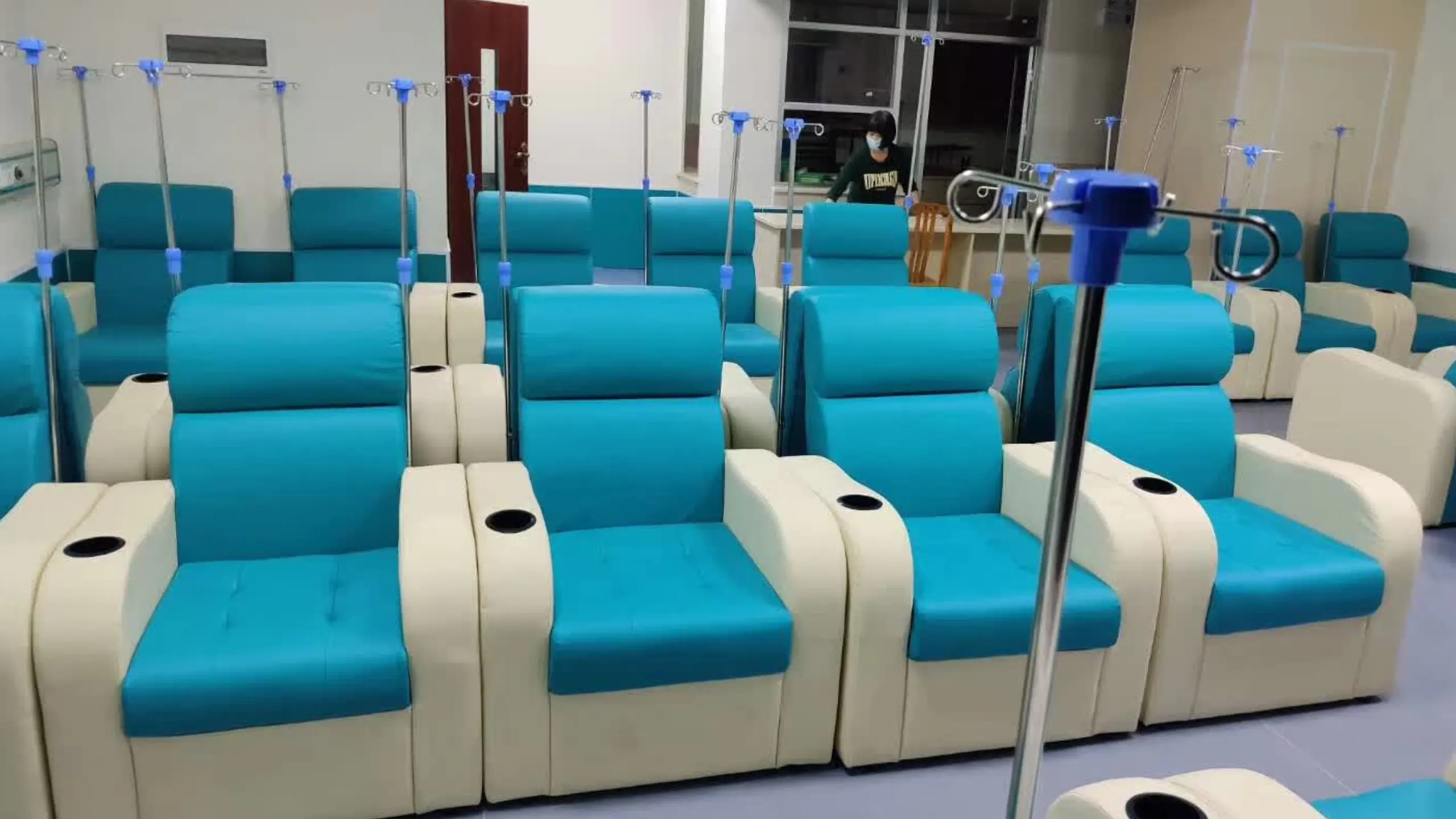
Mounting the IV pole on the chair means the infusion moves with the patient rather than needing a separate stand in the unit. Heights are adjustable, typically 1,500–2,000 mm, to suit different bag positions.
It is a small detail that changes how the unit works day to day, and it is the reason the chair is bought as one item rather than a chair with equipment added later.
Promptinfusion chair reclined with a patient resting during chemotherapy treatment, IV drip running, calm day unit interior photography
ShotA chair reclined during a long treatment session.
Product04.2 Infusion Chairs
PromptIV pole mounted on an infusion chair with drip bag hanging, tubing and stand detail, clinical product photography
ShotAn IV pole mounted on the chair rather than standing separately.
Product04.2 Infusion Chairs
Arm access, cleaning and moving the chair
- Armrests are set at a height that allows cannulation and arm access without the patient moving out of position, and lift-away armrests are available for side transfer.
- The upholstery is a wipe-clean material so the chair can be turned round between patients.
- Chairs on braked castors can be repositioned in the unit and then held in place, which is how most day units actually use them.
