
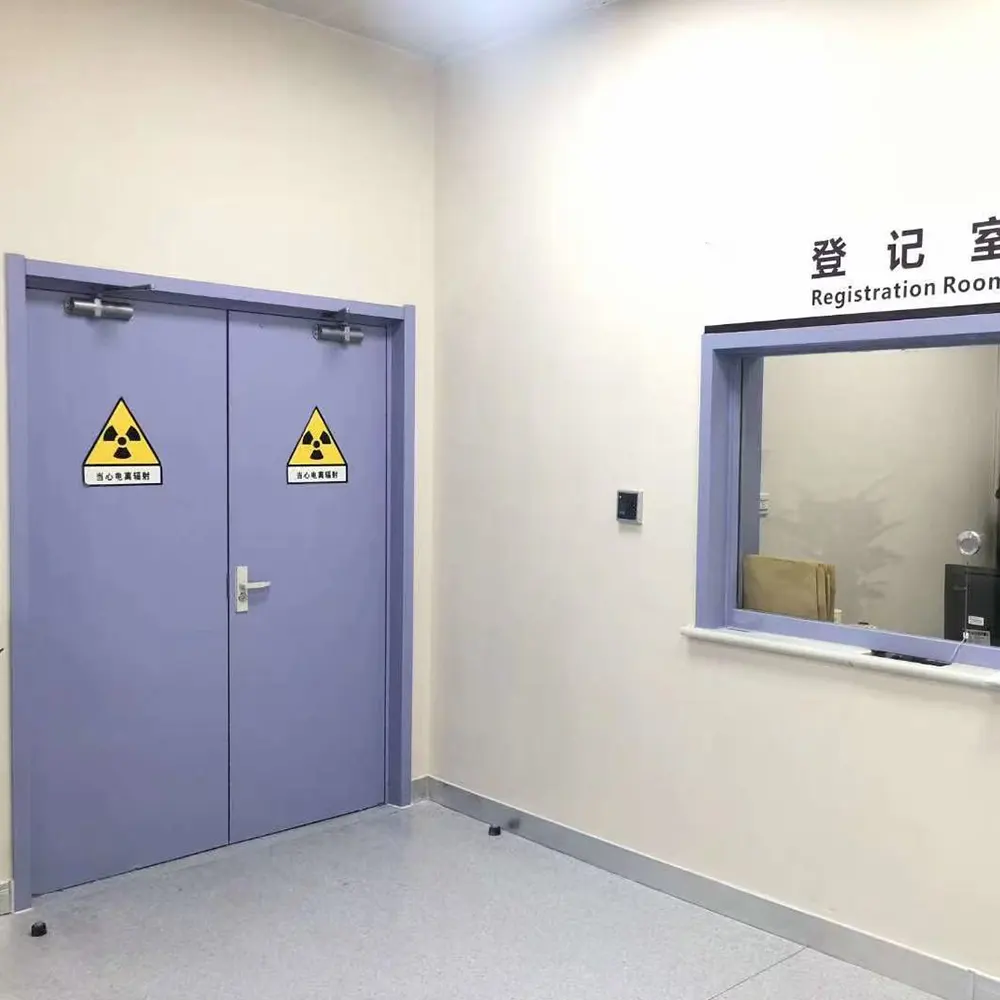
Lead-Lined Radiation Protection Doors
Doors with an integrated lead core for CT, DR and X-ray rooms, with vision panel and hardware options to suit the room layout.
View Details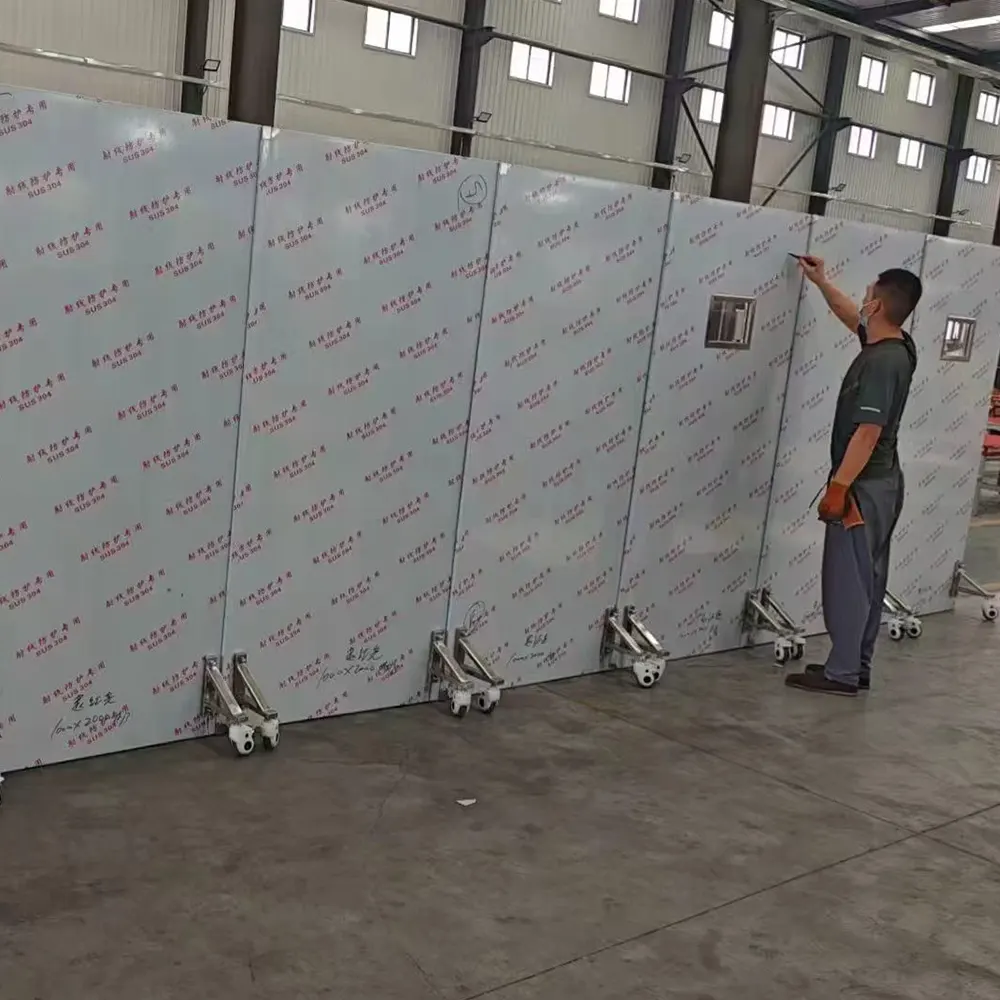
Lead screens are mobile and fixed radiation shielding screens used inside X-ray and imaging rooms to protect staff during procedures, supplied with lead glass viewing panels and lead equivalent values to suit the room.

A lead screen is a shielding panel used inside a room rather than on its boundary. It stands between a person and the source of radiation — at the bedside during a mobile X-ray, in the interventional suite where staff work close to the equipment, or wherever a fixed wall is not in the right place for the way the work is actually done.
Screens are used in X-ray examination rooms, interventional and angiography suites, operating theatres with mobile imaging equipment, catheterisation laboratories, veterinary imaging rooms and industrial radiography areas, as a second line of protection alongside the room's fixed shielding.
The common form is a mobile screen on castors, which can be moved to wherever the procedure is taking place, with a lead glass viewing panel so the operator can see what is being imaged while standing behind it. Fixed and suspended versions are used where the working position is predictable and does not change — for example at a fixed control position or hung over a doorway.
Selection follows the working position, how often it moves, and the value needed at that point, which is generally lower than the room's wall value because the screen works at a greater distance and for shorter periods.
| Product Type | Radiation shielding screen |
|---|---|
| Typical Use | In-room protection for staff during imaging procedures |
| Lead Equivalent | 0.5–2 mmPb, customizable |
| Type | Mobile on castors, or fixed / suspended |
| Panel Size | 600 × 900 mm to 900 × 1,800 mm, customizable |
| Panel Height | 900–1,800 mm, customizable |
| Viewing Panel | Lead glass window, optional, at the panel's lead equivalent |
| Frame | Steel frame, powder-coated |
| Base | Castors with brakes on mobile versions |
| Packing | Crated with edge protection for the shielding panel |
| Notes | Values shown are typical of this item. Final specification is confirmed against the protection required at the working position. |
| Lead equivalent | 0.5–2 mmPb, per the protection required at the working position |
|---|---|
| Type | Mobile on castors, fixed, or suspended |
| Panel size | 600 × 900 mm to 900 × 1,800 mm, made to the working position |
| Panel height | 900–1,800 mm, to suit whether the operator works seated or standing |
| Viewing panel | Lead glass window at the same lead equivalent as the screen, sized to the sightline required |
| Frame and base | Steel frame with braked castors, or a weighted base for fixed positions |
| Finish | Powder-coated steel in the project's colour |
Lead screens are used inside imaging rooms as a second line of protection, wherever staff stand close to the equipment or close to the patient during a procedure: X-ray examination rooms, interventional and angiography suites, catheterisation laboratories, operating theatres with mobile imaging equipment, radiotherapy support positions, veterinary imaging rooms and industrial radiography areas. The screen is selected from the working position, how often it has to move and the value required at that point, and it is normally specified alongside the room's fixed shielding rather than as a replacement for it.
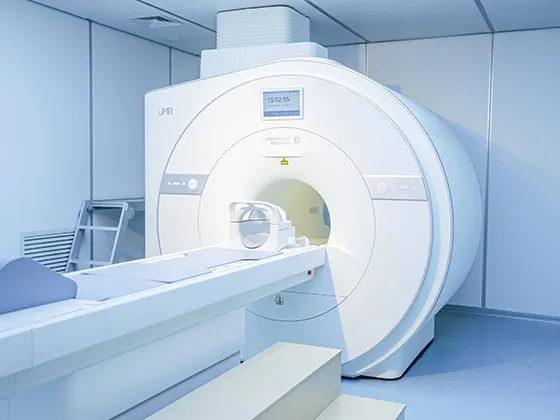
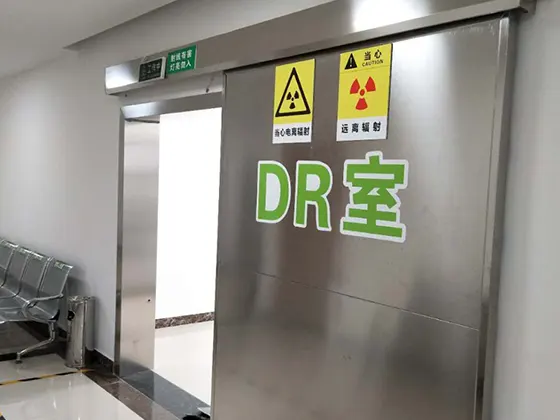

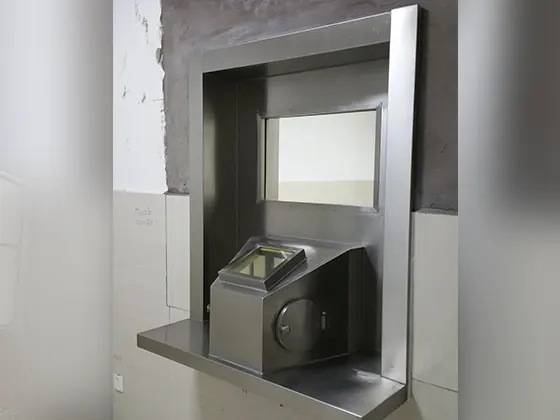

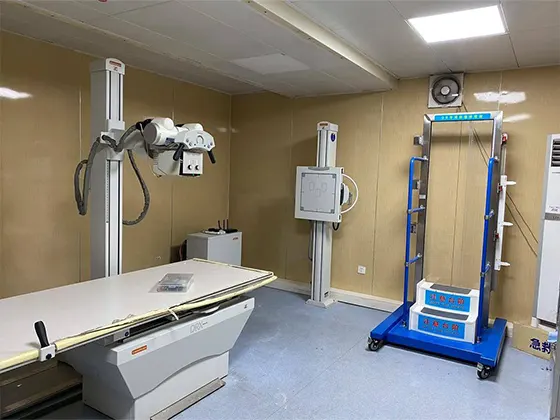
Every unit passes the same five stages below. Checks are recorded per unit rather than sampled, and a unit does not move to the next stage until the previous one is signed off.
Lead sheet thickness, barium sulphate density and glass lead equivalent are verified against the supplier certificate before the material enters the workshop.
Shielding layers are measured for thickness and uniformity at the points that matter most — corners, edges and any joint. This is the check that decides whether the product is fit to ship.
Overlaps and joints are inspected for width and continuity. A gap in a shield is not a cosmetic defect, so every joint is measured rather than sampled.
Frame, glass and shielding are checked for fit and alignment. Doors and screens are operated through their full range to confirm the shielding stays continuous in the closed position.
Surfaces and edges are inspected for damage and finish quality, then the unit is protected, labelled with its shielding data and packed against the shipping list.
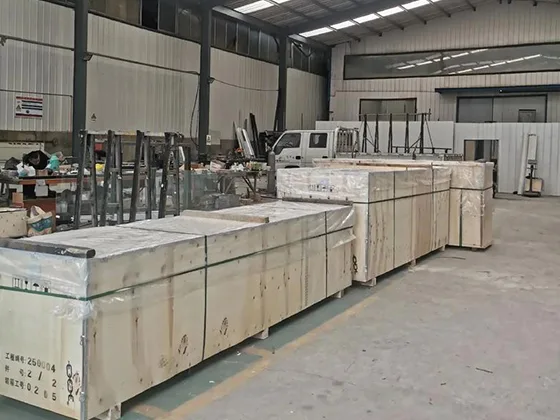
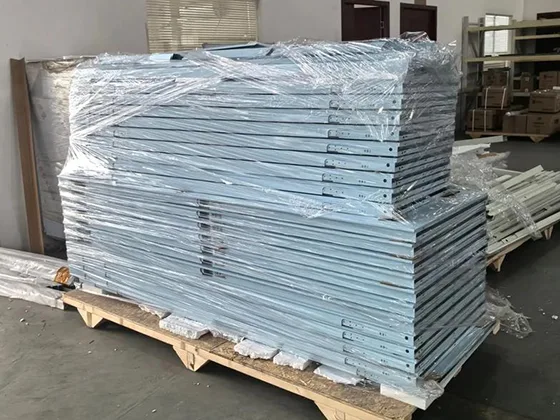
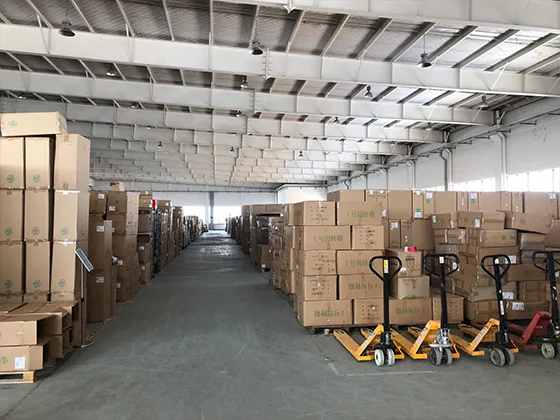
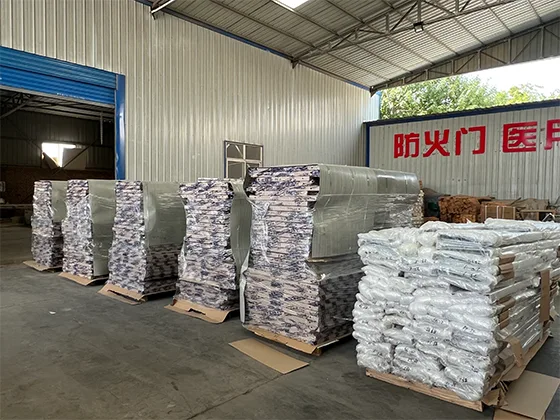
Crated with edge protection for the shielding panel.


What lead equivalent does a screen need?
It follows from the working position. Because a screen is used at a greater distance and for shorter periods than a wall, the value is normally lower than the room lining — but it is set from the protection required at that point, not assumed.
Mobile or fixed?
Mobile where the working position changes, fixed or suspended where it does not. A mobile screen is moved to the procedure; a fixed one is placed where the procedure always happens.
Can it have a viewing window?
Yes. A lead glass panel at the same lead equivalent as the screen lets the operator work behind it instead of stepping out to see.
Does a screen replace the room's fixed shielding?
No. It is a second line of protection for staff working close to the equipment, not a substitute for the shielding of the room boundary.
How tall should it be?
Tall enough to cover the working position — typically 900–1,800 mm, depending on whether the operator stands or works seated.
Will it stay in place during a procedure?
Mobile versions have braked castors and fixed versions a weighted base, so the screen does not drift while work is in progress.
Can several screens be used together?
Yes. Where a longer barrier is needed, screens can be positioned side by side, which is common in interventional work.
What do you need from us to quote?
Where the screen will be used and whether the position changes, the value required at that point, the operator's working height, and whether a viewing window is needed.
Other items in Radiation Protection.
Doors with an integrated lead core for CT, DR and X-ray rooms, with vision panel and hardware options to suit the room layout.
View Details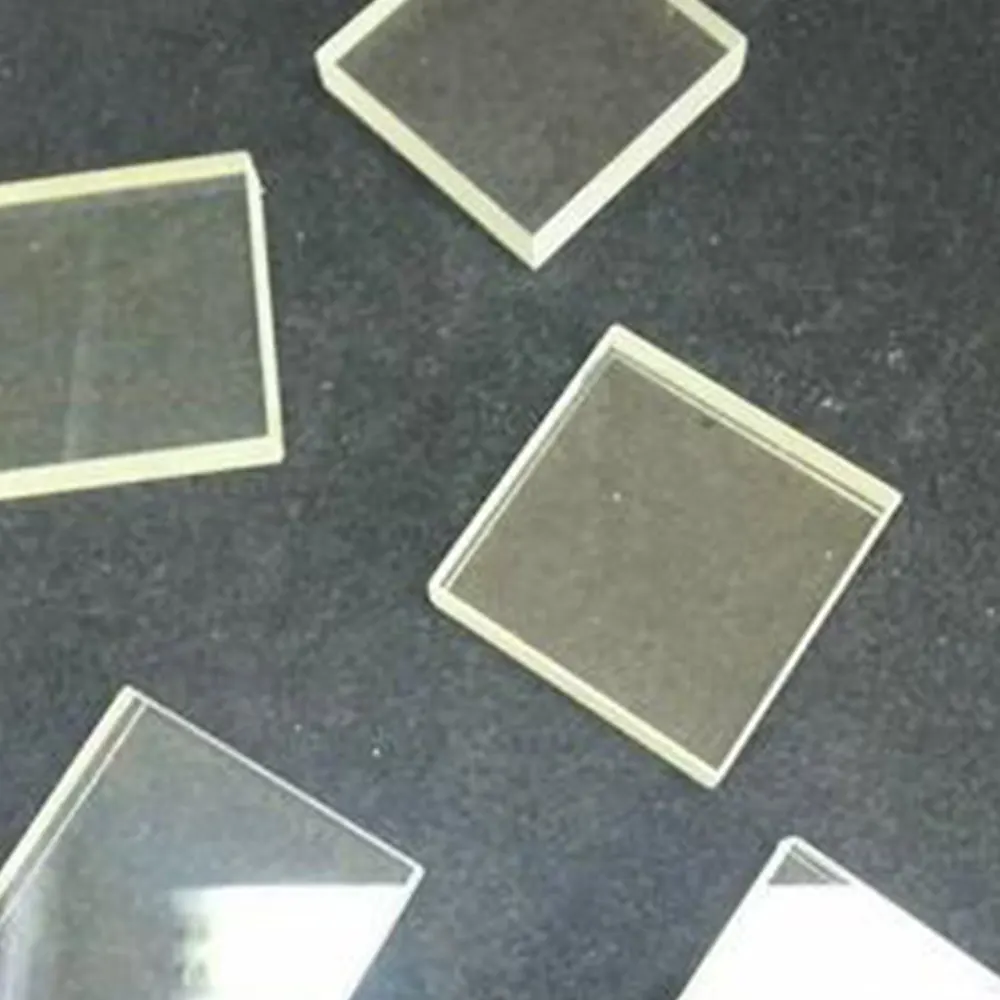
Lead glass for observation windows in CT, DR and X-ray rooms. Supplied to match the shielding value of the surrounding wall.
View Details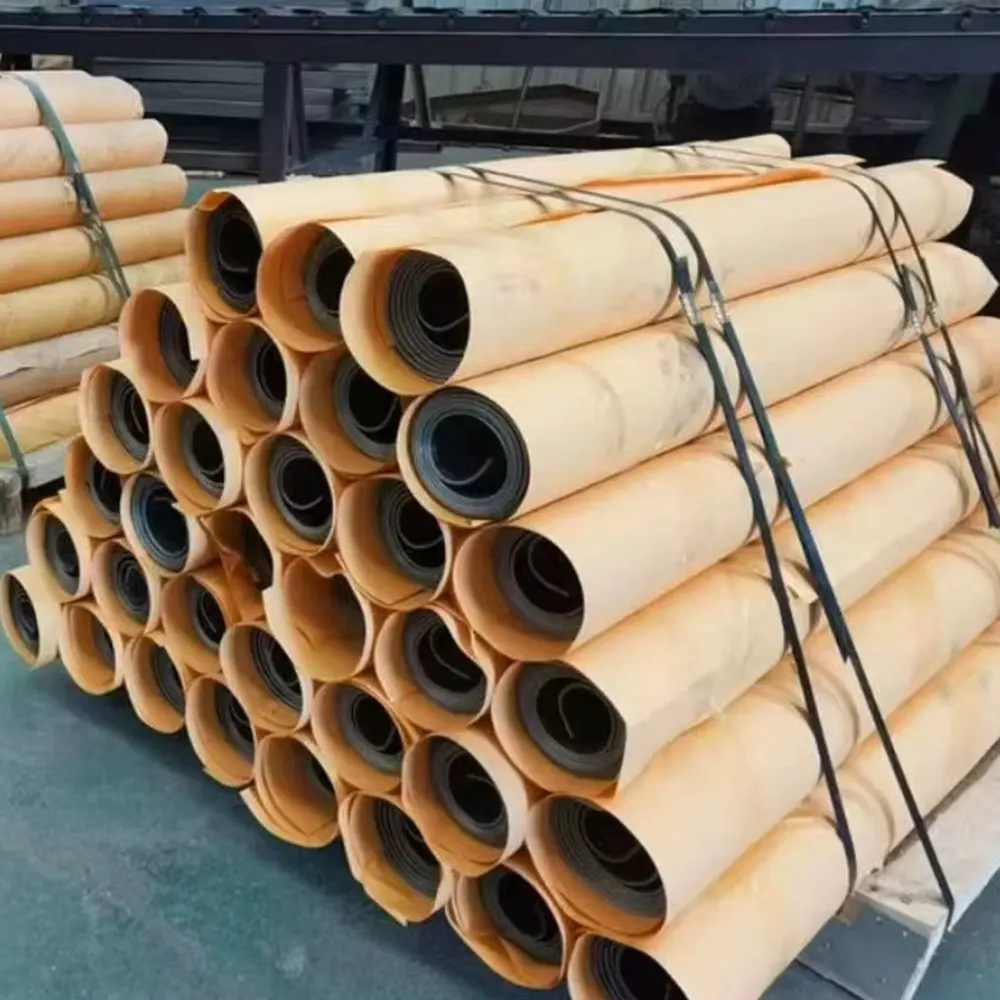
Lead plate for wall, ceiling and floor lining. Available in a range of lead equivalent values to match your room's shielding requirement.
View DetailsBackground reading on Lead Screens and how it is specified.
Room shielding does not cover staff who work close to the equipment. This article explains when mobile lead screens and personal protective wear are needed, and how their values are decided.
Read Article
Tell us the room type, opening size, lead equivalent requirement or door configuration. We will come back with a practical supply proposal.