
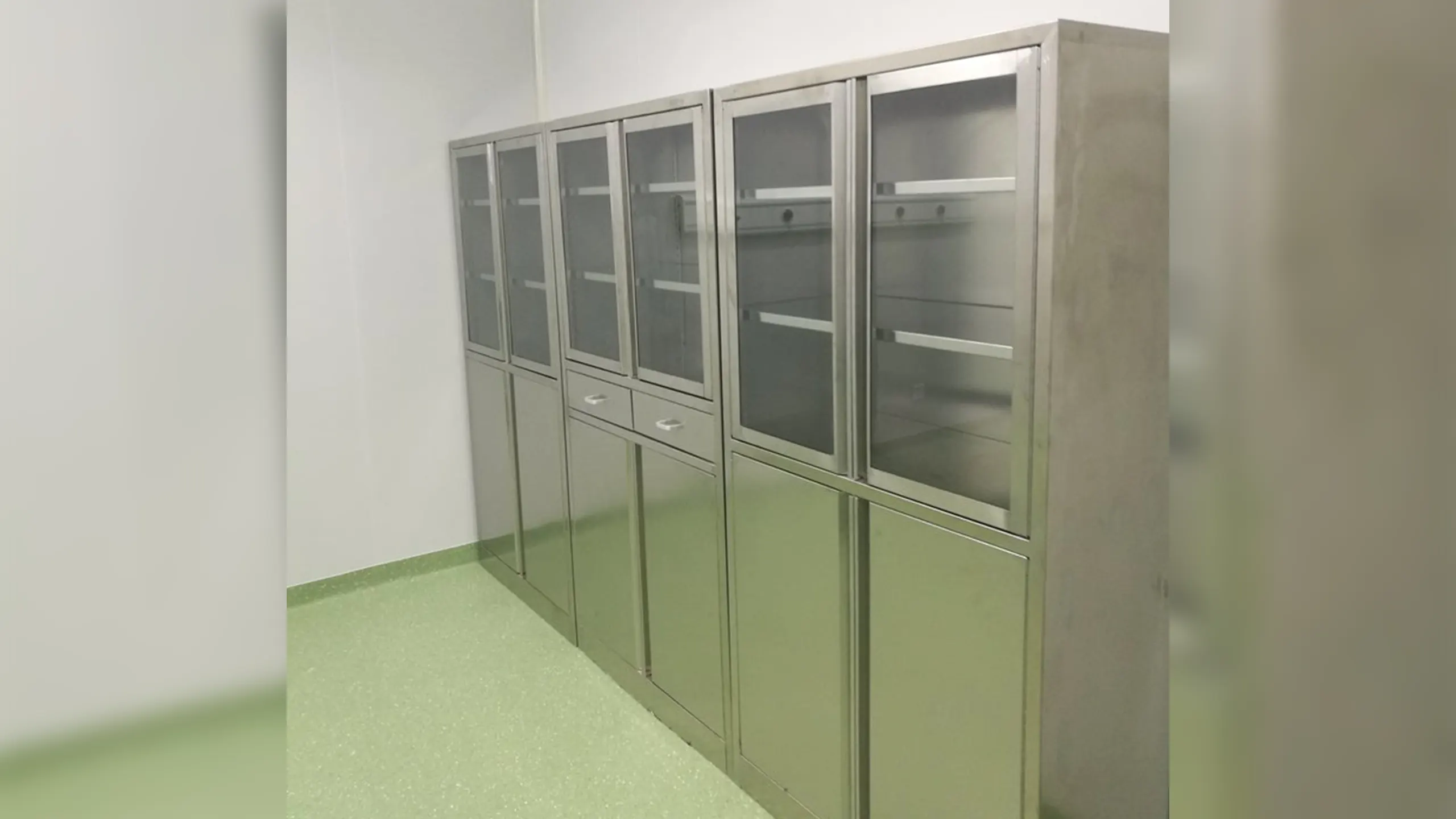
Keywordsanesthesia cabinetanaesthetic room storagetheatre drawer cabinetdrug storage cabinetclinical cabinet layout
The layout is the specification
What an anaesthetist needs during a case has to be reachable with one hand, without turning away from the patient. That puts the items used most often at working height, and it puts emergency items in the same position every time.
A cabinet that is one open space with shelves becomes disorganised as soon as it is in use, which is why the interior is agreed with the department rather than taken from a standard unit.
Why drawers and full-extension slides
- Drawers keep small items visible at a glance, and full-extension slides mean the whole drawer comes out so nothing is reached for blindly at the back.
- That is the reasoning behind a drawer in this setting rather than a shelf: in a procedure, finding an item by feel in the back of a shelf is the thing to avoid.
- Drawer compartments and dividers are set out to the items the room actually uses.
Promptanaesthetist reaching for a supply from a stainless steel drawer cabinet during a procedure, hand on drawer, clinical documentary photography
ShotSupplies at working height, reached without turning from the patient.
Product04.4 Anesthesia Cabinets
Promptstainless steel medical drawer pulled fully open on extension slides showing compartment dividers and organised supplies, clinical cabinet interior detail
ShotA drawer on full-extension slides with compartments laid out to the supplies.
Product04.4 Anesthesia Cabinets
Lockable compartments within one cabinet
Where controlled medicines are held, individual drawer or compartment locks separate them from general supplies in the same cabinet, so the department is not forced to buy a second unit.
The top surface can serve as a preparation area, and a raised edge can be added where items should not roll off. Both are decided with the department, since they follow how the room is worked in.
